[Case] Can delayed oocyte retrieval improve blastocyst euploidy? A 36-year-old IVF cycle review
Ms. S, 36, pursued IVF after two egg retrievals in her home country totaling 12 eggs with no transferable embryos. In April 2026 she began third-generation IVF at Dan Ruo IVF Clinic (DRC); a conventional retrieval yielded 6 biopsy-eligible blastocysts, but none passed PGT (third-generation IVF screening). After switching to delayed oocyte retrieval (42 hours after trigger), 2 of 4 blastocysts were transferable; a single transfer was followed by β-hCG 103.90 mIU/mL. Delayed retrieval is not routine at this center and depends on clinical judgment. This is a single case report and does not prove that delayed retrieval improves blastocyst euploidy rates.
Ms. S, 36, pursued IVF after two egg retrievals in her home country totaling 12 eggs with no transferable embryos. In April 2026 she began third-generation IVF at Dan Ruo IVF Clinic (DRC); a conventional retrieval yielded 6 biopsy-eligible blastocysts, but none passed PGT (third-generation IVF screening). After switching to delayed oocyte retrieval (42 hours after trigger), 2 of 4 blastocysts were transferable; a single transfer was followed by β-hCG 103.90 mIU/mL. Delayed retrieval is not routine at this center and depends on clinical judgment. This is a single case report and does not prove that delayed retrieval improves blastocyst euploidy rates.
When conventional retrieval hits a wall, can delayed oocyte retrieval open a path for complex cases? Ms. S’s IVF journey shows why individualized care matters.
Patient background
Ms. S is 36. She had already undergone two egg retrievals in her home country—12 eggs in total—without forming usable embryos.

Records related to two prior retrievals with no usable embryos
At her first retrieval at Dan Ruo in April 2026, the numbers looked reasonable: 12 eggs, 10 mature, 7 normally fertilized, and finally 6 biopsy-eligible blastocysts. Unfortunately, the PGT (third-generation IVF) report showed no embryos that passed screening—no transferable embryos:
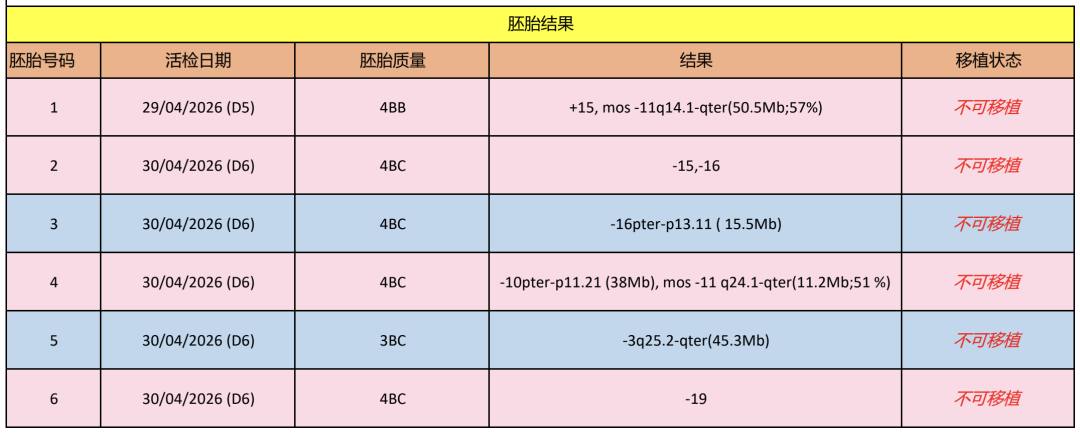
First-cycle PGT report: all 6 blastocysts failed screening
Three months later she underwent a second retrieval. After review by the attending physician and laboratory embryologists at Dan Ruo, they chose a delayed oocyte retrieval plan. Following discussion with Ms. S, trigger was given at 4:00 p.m. on 8 July, and retrieval was performed at 10:00 a.m. on 10 July (42 hours after trigger, not the usual 36 hours). This cycle: 11 eggs, 6 mature, 5 normally fertilized, and 4 blastocysts, as follows:
D5 5AA: transferable;
D5 5AB: not transferable;
D5 5AB: high-risk mosaic, transfer not recommended;
D6 5BB: transferable.
In the end, after PGT of the 4 blastocysts, 2 were transferable:
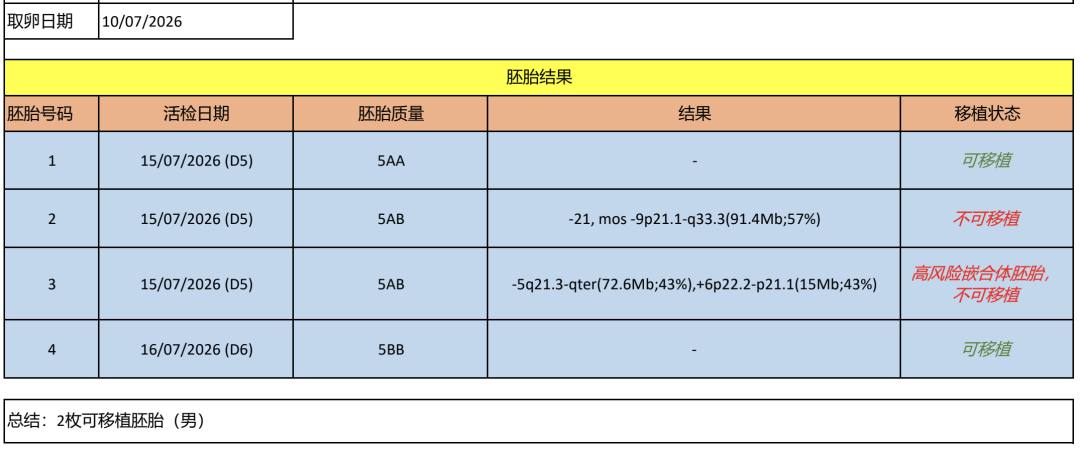
Second cycle (delayed retrieval) PGT: 2 of 4 blastocysts transferable
The first cycle produced 6 blastocysts, yet none could be transferred. The second produced only 4—why did 2 remain? That is why we keep saying: in an IVF cycle, do not judge by egg count alone:
- More eggs do not mean transferable embryos at the end;
- More blastocysts do not mean every one will pass PGT;
- Fewer blastocysts do not mean there is no chance.
Good outcomes still depend on individualized strategy and strong laboratory work:
- First, in both cycles Dan Ruo turned limited mature eggs into blastocysts efficiently;
- Second, after a PGT result of zero, the team did not copy the prior protocol mechanically; they reviewed the case and used individualized delayed retrieval;
- Third, delayed retrieval is not an “upgrade” for everyone. It shows whether clinicians will adjust to the patient—and whether the clinic can support that timing.
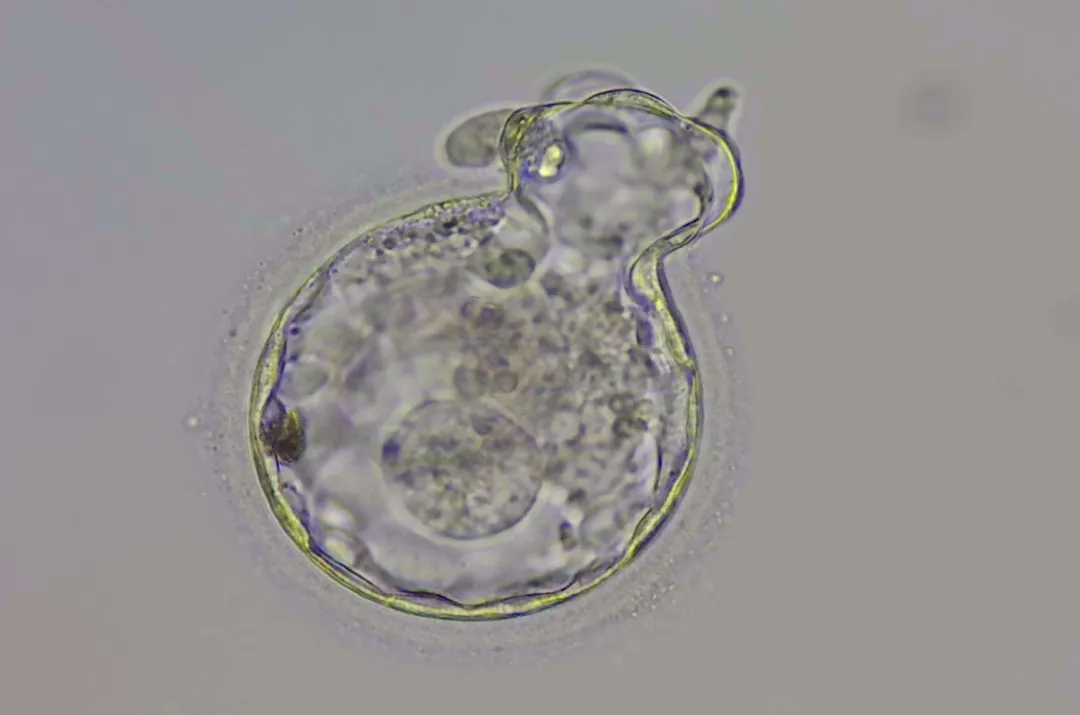
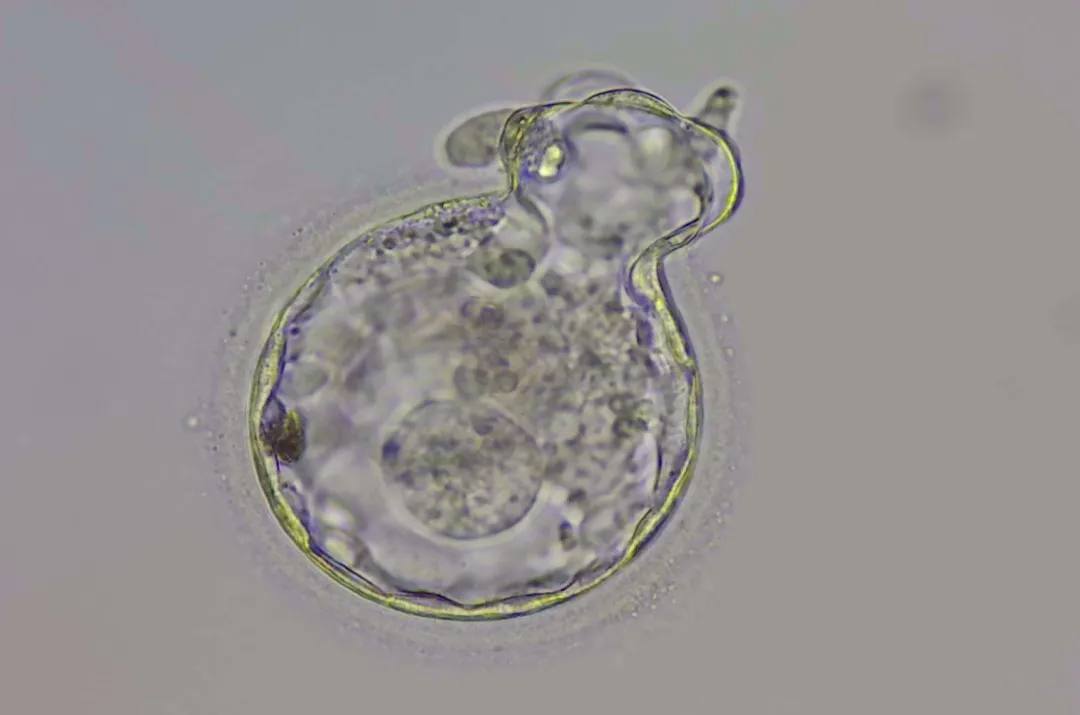
On 9 September, Ms. S’s D5 5AA blastocyst was thawed for transfer. It was 5AA before thaw and remained 5AA after thaw—fully intact.
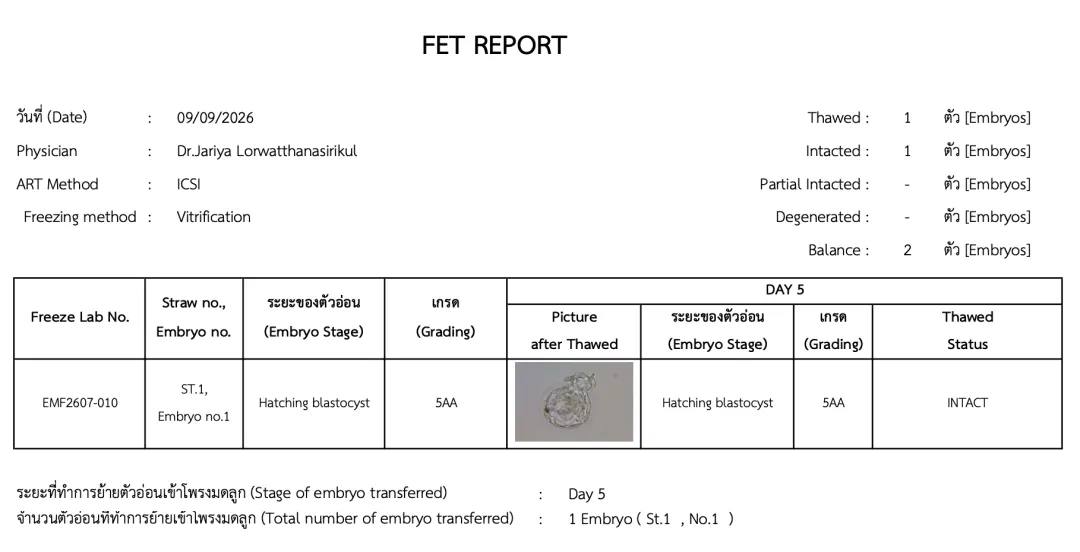
Blastocyst thaw: D5 5AA grade before and after
That same day, this precious blastocyst was transferred.
Transfer-day record
Eight days later came an early pregnancy signal: β-hCG 103.90 mIU/mL;
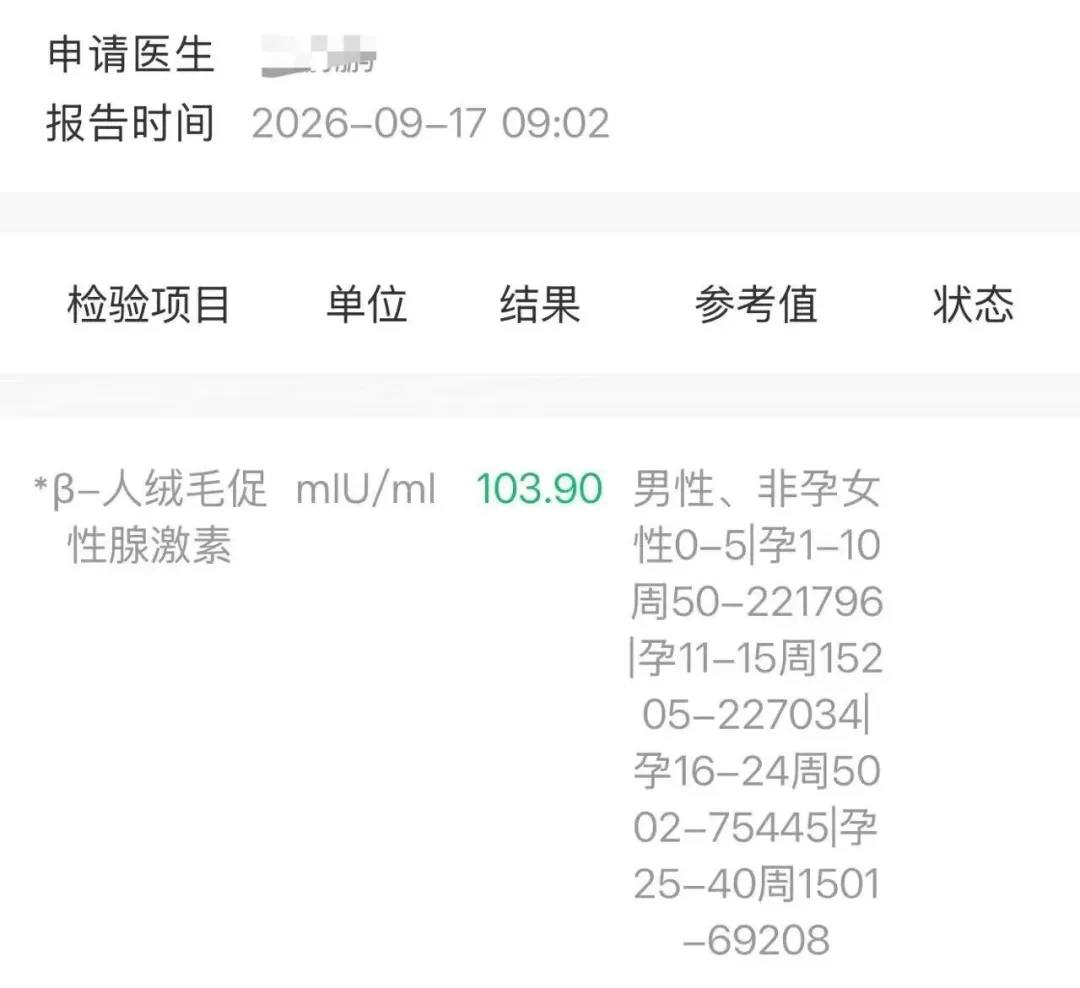
Early post-transfer test: β-hCG 103.90 mIU/mL
What is delayed oocyte retrieval?
Delayed oocyte retrieval is a major advance in ovarian stimulation protocols, developed by Director Kuang Yanping’s team at Shanghai Ninth People’s Hospital. Most patients have retrieval about 36 hours after trigger. Delayed retrieval means 38 hours or more—commonly 41–43 hours; for advanced age or low ovarian reserve it may extend to 45 hours or beyond. Extra time in vivo may allow more complete cytoplasmic maturation and better nuclear–cytoplasmic synchrony, with reported benefit in selected complex cases, including but not limited to fertilization failure, repeated poor embryos (including highly fragmented embryos), and repeated implantation failure (good embryos and endometrium).

Illustration of delayed oocyte retrieval

Related mechanism or comparison notes
What does this case suggest?
This patient had 2–3 retrievals elsewhere with low fertilization and no usable embryos; sperm was once blamed. From the start, Dr. Songguo Xue said sperm was unlikely the main issue. Indeed, in the first Dan Ruo cycle, 10 mature eggs yielded 6 blastocysts—supporting that view—yet blastocyst quality was limited, and none passed PGT-A. Delayed retrieval was tried hoping to improve blastocyst quality and euploidy rate. Fortunately, 5 mature eggs yielded 4 good-quality blastocysts, 2 passed screening, and one transfer led to pregnancy.
It must be stressed: this is a case report only. It does not establish that delayed retrieval improves blastocyst euploidy; more data are needed to confirm or refute that claim.
What can Dan Ruo offer today?
Delayed oocyte retrieval is not routinely offered at Dan Ruo. It is limited to selected cases; indications are determined by the physician.

Dan Ruo IVF Clinic (DRC) related notes or team materials
Disclaimer
This is a de-identified case share. Outcomes vary; it is not a promise of efficacy and does not replace in-person medical advice.
Need a Personalized Plan?
Book a consultation with your records—advisors and specialists will assess your pathway.
Book Consultation